


Unitary Foundation 2026 6-Month Update: Leadership Changes, Joint Ecosystem Reports, and Expanded Open Source Research
Dear Unitary Foundation community,
The first half of 2026 has been an incredibly busy six months for UF. We kicked off the year with Ben Castanon officially stepping into the role of CEO, supported by a newly appointed Advisory Board to guide our Microgrant Program. And we added two new fellows to the staff to help scale our quantum open source research initiatives.
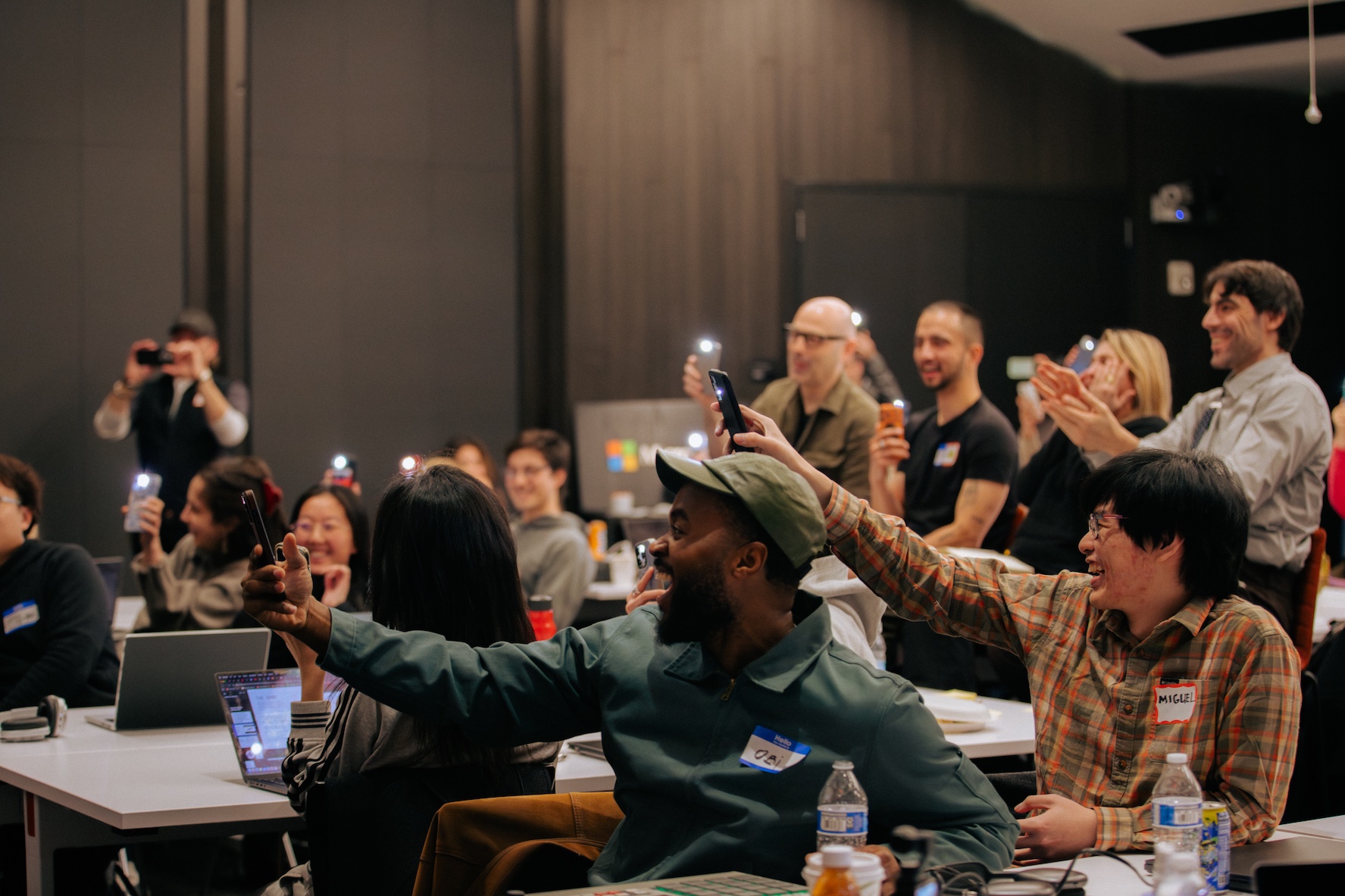
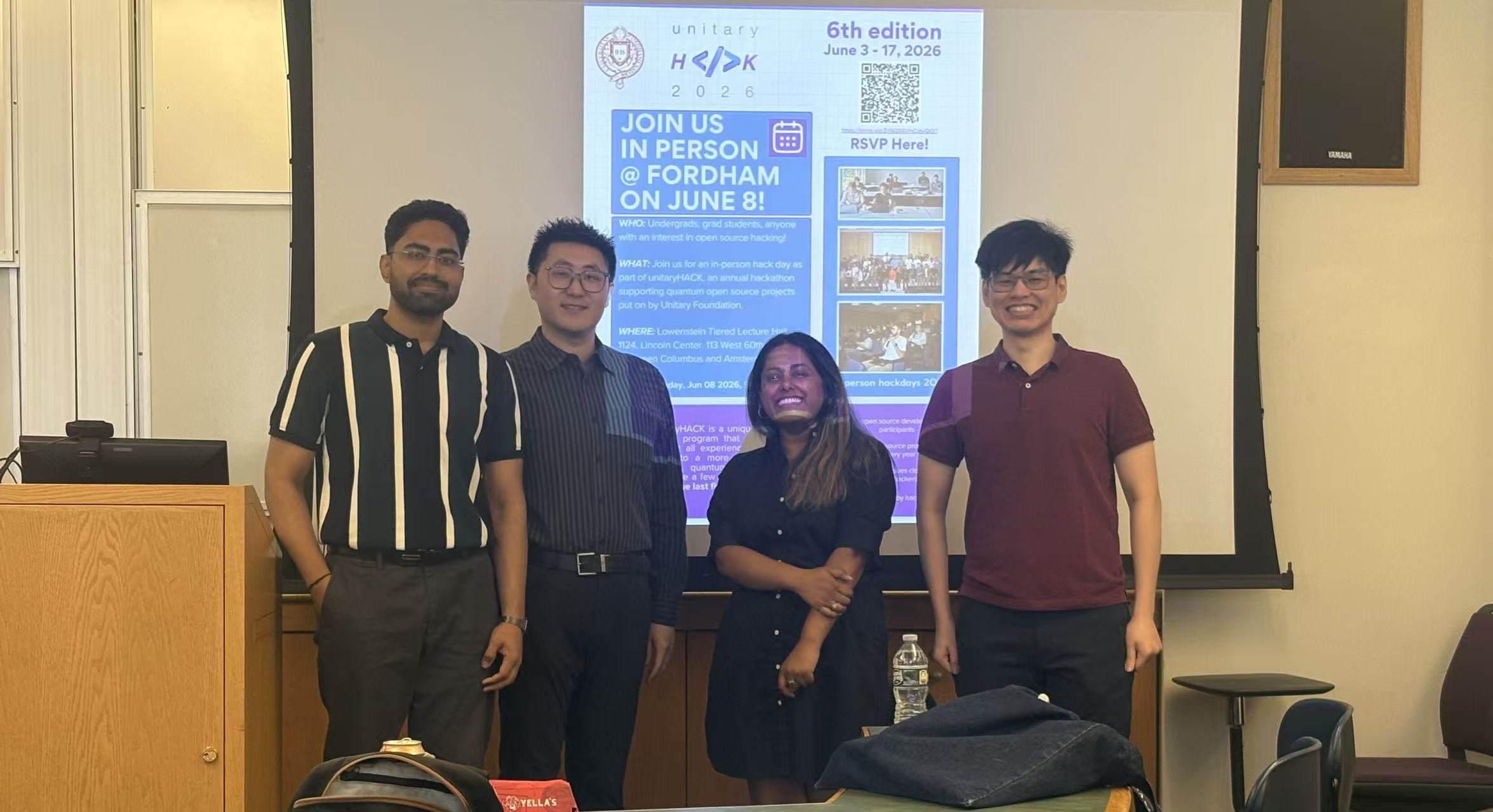
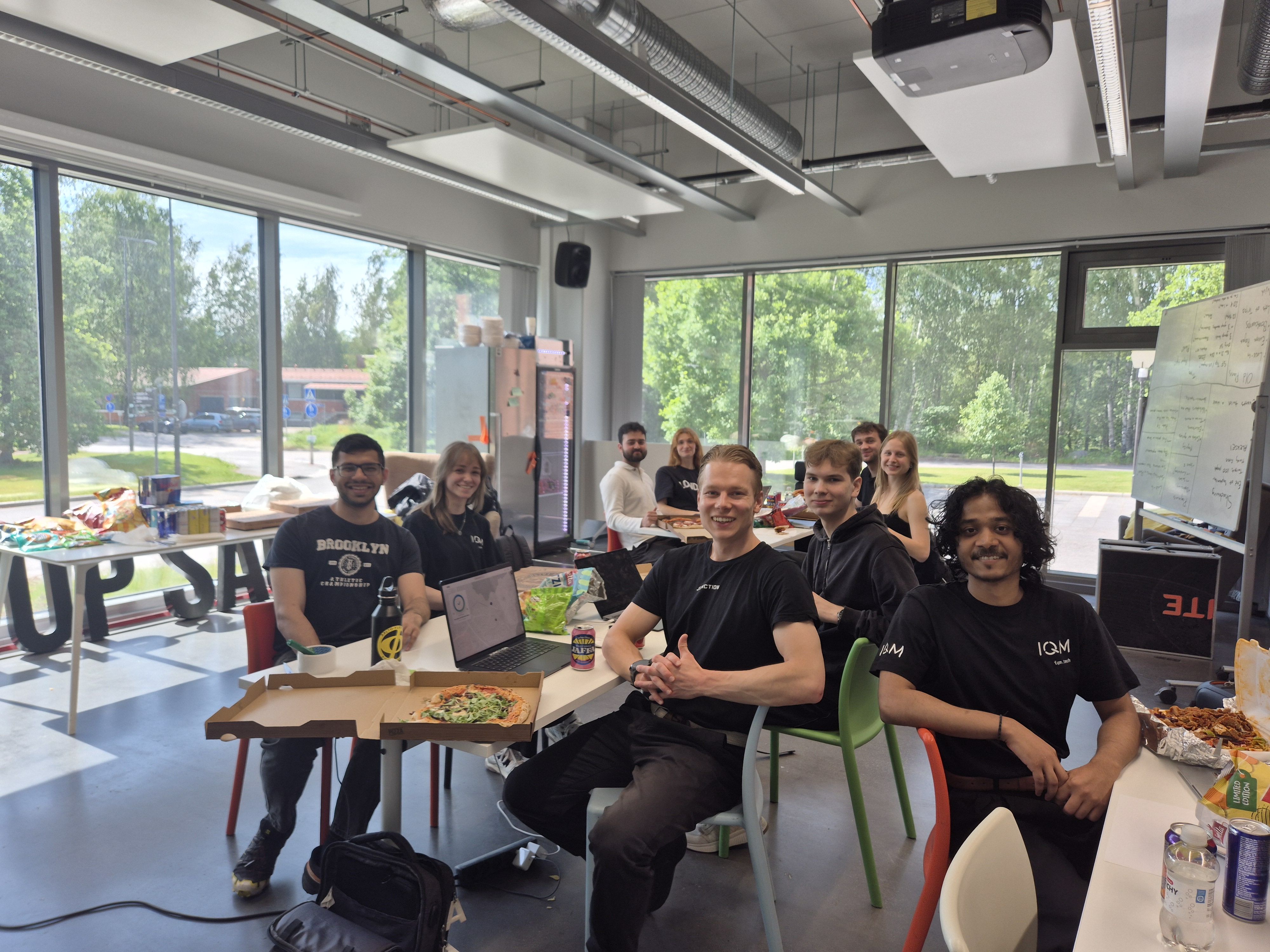
On the community events front, we launched the brand new unitaryDESIGN hackathon in February, ran our annual unitaryHACK, and backed the Girls in Quantum (GiQ)’s annual Q-Volution hackathon.
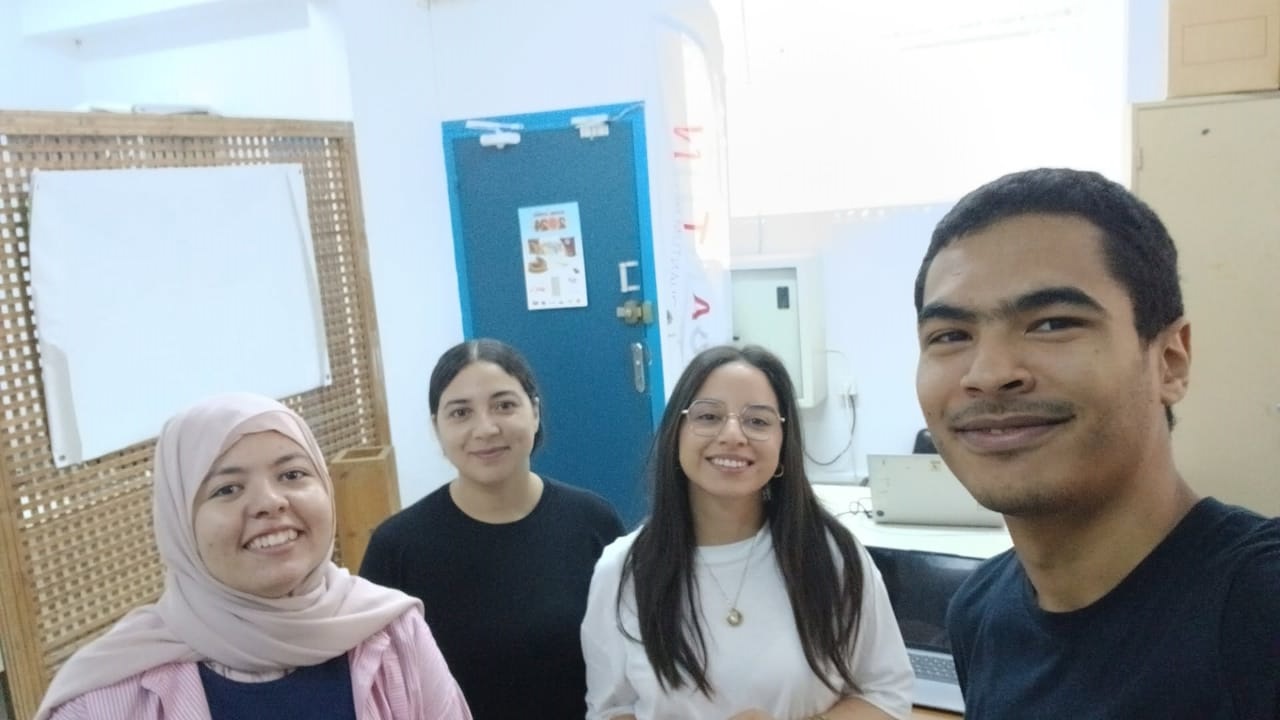
We also had the honor of partnering with UNESCO and IBM on a joint report looking at outcomes from the International Year of Quantum Science and Technology. The results from this report led us to building more relationships with collaborators in the Global South, including a partnership with the African Quantum Consortium during unitaryHACK.
This work is made possible by our amazing and growing member community. We are thrilled to have welcomed NVIDIA as our newest core member and Xanadu as a supporting member to further our mission.
Below you’ll find a look back at what our team and community members have accomplished between January and June of this year. Thanks to everyone for being a part of this continued journey!
Warmly,
The UF Team
Core Projects & Key Milestones
Benchmarking
Metriq has officially received a massive infrastructure overhaul alongside a formal benchmarking paper release, which you can find here. The platform revamp simplifies user submissions, integrates cleaner data tracking visualizations, and aims to establish Metriq as an open, community-driven database for checking state-of-the-art hardware performance. Read more about our work behind the scenes and learn how you can contribute here.
Compilation & Simulation
We’ve launched a new tool out of Unitary Labs: Clifft, a framework optimized for the fast, exact simulation of near-Clifford quantum circuits. You can read the technical deep dive in our dedicated post here. And join us in contributing to the code!
Furthermore, the Unitary Foundation was awarded a highly competitive NSF PESOSE (Pathways to Enable Secure Open-Source Ecosystems) grant to explicitly strengthen the open-source community ecosystem surrounding quantum compilation. More news to come on this front!
Python Ecosystem Mainstays
qlass: a new paper and a freshly published Python package designed specifically for variational quantum algorithms on photonic devices, bridging the gap between abstract algorithmic design and specialized optical hardware.
QuTiP 5: Released with upgraded features and full documentation, continuing its role as a widely used open-source library for quantum dynamics in Python.
Research & Publications
Our staff and funded micrograntees have kept up a steady cadence of research over the last six months.
Unitary Labs
- A. Cosentino, C. Li, V. Russo, B. A. Chase, T. Lubinski, S. Niu, N. Patel, N. Shammah, W. J. Zeng, Metriq: A Collaborative Platform for Benchmarking Quantum Computers, arXiv preprint (2026), [DOI: 10.48550/arXiv.2603.08680] [metriq.info]
- B. A. Chase, F. Labib, Clifft: Fast Exact Simulation of Near-Clifford Quantum Circuits, arXiv preprint (2026), [2604.27058]
- F. Labib, A. Rajamani, B. Senjean, N. Shammah, qlass: A Python Package for Variational Quantum Algorithms on Photonic Devices, Journal of Open Source Software 11, 9316 (2026) [JOSS DOI.21105/joss.09316; Zenodo DOI 10.5281/zenodo.18245793]
- F. Labib, V. Russo, Stabilizer rank bounds for magic-state orbits, arXiv (2026) [2605.28586]
- N. Lambert, E. Giguère, P. Menczel, B. Li, P. Hopf, G. Suárez, M. Gali, J. Lishman, R. Gadhvi, R. Agarwal, A. Galicia, N. Shammah, P. Nation, J. R. Johansson, S. Ahmed, S. Cross, A. Pitchford, F. Nori, QuTiP 5: The Quantum Toolbox in Python, Physics Reports 1153, 1-62 (2026), [2412.04705]
Additional Research from the UF Team
- F. Labib, D. Nicholaeff, V. Russo, W. J. Zeng, Compressed Sensing for Efficient Fidelity Estimation of GHZ States arXiv (2026), [2604.27824]
- N. Johnston, V. Russo, Distinguishability of locally diagonal orthogonally invariant quantum states arXiv (2026), [2604.12808]
- Y. Le Fur, E. Egger, H.-Y. Hu, V. Russo, W. J. Zeng, R. LaRose, Opportunities and challenges in scaling quantum error detection on hardware arXiv (2026), [2605.02861]
- T. Gupta, A. Mohan, S. Murshid, V. Russo, J. Sikora, A. Zheng, Local strategies are pretty good at computing Boolean properties of quantum sequences. arXiv (2026), [2603.05452]
Micrograntee Breakthroughs
- A. Rouillard, M. Lourens, F. Petruccione, Automated quantum algorithm design using a domain-specific language, EPJ Quantum Technology, (2026), [DOI: 10.1140/epjqt/s40507-026-00472-4]
Ecosystem-Focused Publications and Think Pieces
- J. Zhao, L. Kotamaki, G. Crossman, V. Vijayakumar, B. Castanon, A. Kasry, The Quantum moment: a global report; Outcomes of the International Year of Quantum Science and Technology, UNESCO (2026), [DOI 10.54677/NTNB6257]
- Unitary Foundation, Our Vision for the NSF Tech Labs Initiative, UF Blog (2026), https://unitary.foundation/posts/2026_techlabs_initiative/
- W. Zeng and B. Castanon, The Open Foundation Quantum Technology Needs, (2026), https://unitary.foundation/assets/The_Open_Foundation_Quantum_Technology_Needs.pdf
- E. Maschio, I. Choi, Open Source Code and Beyond: Building the Collaborative Future of H-hat, UF Blog (2026), https://unitary.foundation/posts/2026_h-hat_collab/
2026 Q1 and Q2 Grants
- To Evan Dobbs to develop the Fault-Tolerant Compiler Collection, a python library which acts as a framework for linking various fault-tolerant compilation tools together in order to perform end-to-end compilation of error-corrected quantum circuits.
- To Jose A Bolanos (J) to develop Topologiq UX, a user-friendly UX for Topologiq. Topologiq is a tool to automatically convert ZX circuits into logical versions of themselves. It is based on the surface code and lattice surgery and is compatible with PyZX and, via QASM/PyZX, several other circuit design frameworks, such as Qiskit.
- To Aleks Kissinger to develop ZX Calculus Online with the support of Nicolas De Matteis and Harry Stoltz. This project will build an online, gamified introduction to quantum computation using the graphical language of the ZX calculus.
- To Ludwig Schmid and Tom Peham to expand QECirc, a community-driven library for quantum error correction circuits with mentorship from Prof. Robert Wille. The project provides a central place to find, share, and reuse circuits for common QEC tasks such as encoding, state preparation, syndrome extraction, and related workflows.
- To Dariusz Zielonka and Felix Huber to develop the open-source library ReinforceSDP. This project aims to provide a pipeline for finding semidefinite programming refutations for quantum information problems via reinforcement learning.
- To Jing Yan Haw for qrand-beacon, a project to integrate a high-speed Quantum Random Number Generator (QRNG) into the NQSN Quantum Randomness Beacon. The project will connect real quantum hardware to a publicly accessible stream of secure, verifiable random numbers, providing a trustworthy resource for researchers and institutions working in cryptography, digital auditing, and related fields.
Global Policy & Community Initiatives
International Collaboration
We partnered with global stakeholders to publish two important strategy updates framing the structural needs of our field:
- The Open Foundation Quantum Technology Needs — Mapping infrastructure vulnerabilities in open quantum software in partnership with Mozilla Foundation. Read the OpEd here.
- The Quantum Moment: A Global Report — Synthesizing the high-level policy outcomes and tech transfers stemming from the International Year of Quantum Science and Technology alongside UNESCO and IBM. Read the high level blogpost here.
Community Events & Programs
- unitaryHACK 2026: Our flagship hackathon returned this summer, drawing over a thousand global hackers to resolve issues and claim bounties across dozens of open-source quantum repositories.
- unitaryDESIGN: Launched as a new dedicated hackathon focused on documentation, visualization, and science communication within the open source quantum tech space.
- GiQ Support: Extended organizational support to the Girls in Quantum (GiQ) initiative to foster diverse talent retention across the ecosystem.
Conferences & Talks
- QSC All-Hands: Technical staff member Bradley Chase attended the Quantum Science Center all-hands meeting, driving core contributions into the software ecosystem and validation thrust areas.
- Invited Keynotes: Technical staff member Changhao Li delivered invited talks at both the APS Global Summit and QNet.
- Mozilla Talk Series: Staff members Alessandro Cosentino, Will Zeng, Sebastian Hastings, Ben Castanon, and Veena Vijayakumar represented UF in a month-long open-source ecosystem series, co-hosted with Mozilla Foundation. Read about all of the talks here.
Coming Up
Keep an eye out for news about unitaryCON26, our annual Quantum Open Source Software survey, and even more community engagement activities in the Fall!
Want to get involved right now? Check out the Metriq and Clifft projects, join our weekly community calls and ongoing discussions in the UF Discord, or consider supporting Unitary Foundation as an individual donor.