


Building an Open Foundation: A Recap of the Unitary Foundation x Mozilla Foundation 2026 Talk Series
Over the past few months, Unitary Foundation + Mozilla Foundation have collaborated on a series of deep-dive conversations exploring the intersection of open-source principles and the emerging quantum ecosystem. As quantum technology moves from theoretical research to early-stage implementation, the lessons learned from the history of the open web have never been more relevant. Our joint talk series brought together experts, advocates, and developers from UF to discuss how we can ensure this next era of computing remains a public resource—accessible, transparent, and community-led. Here is a look back at the key themes and conversations from the series.
1. Democratizing Access through Open Source
A recurring theme throughout the series was the “quantum divide.” We looked at how open-source development and community organizing can act as bridges for those who might otherwise be excluded from the field. By lowering the barriers to entry—whether through better documentation, accessible tooling, or community support— both Unitary Foundation and Mozilla Foundation aim to ensure that more voices are represented in the development of these powerful technologies.
2. Why Quantum Tech Needs Open and Accessible Benchmarking
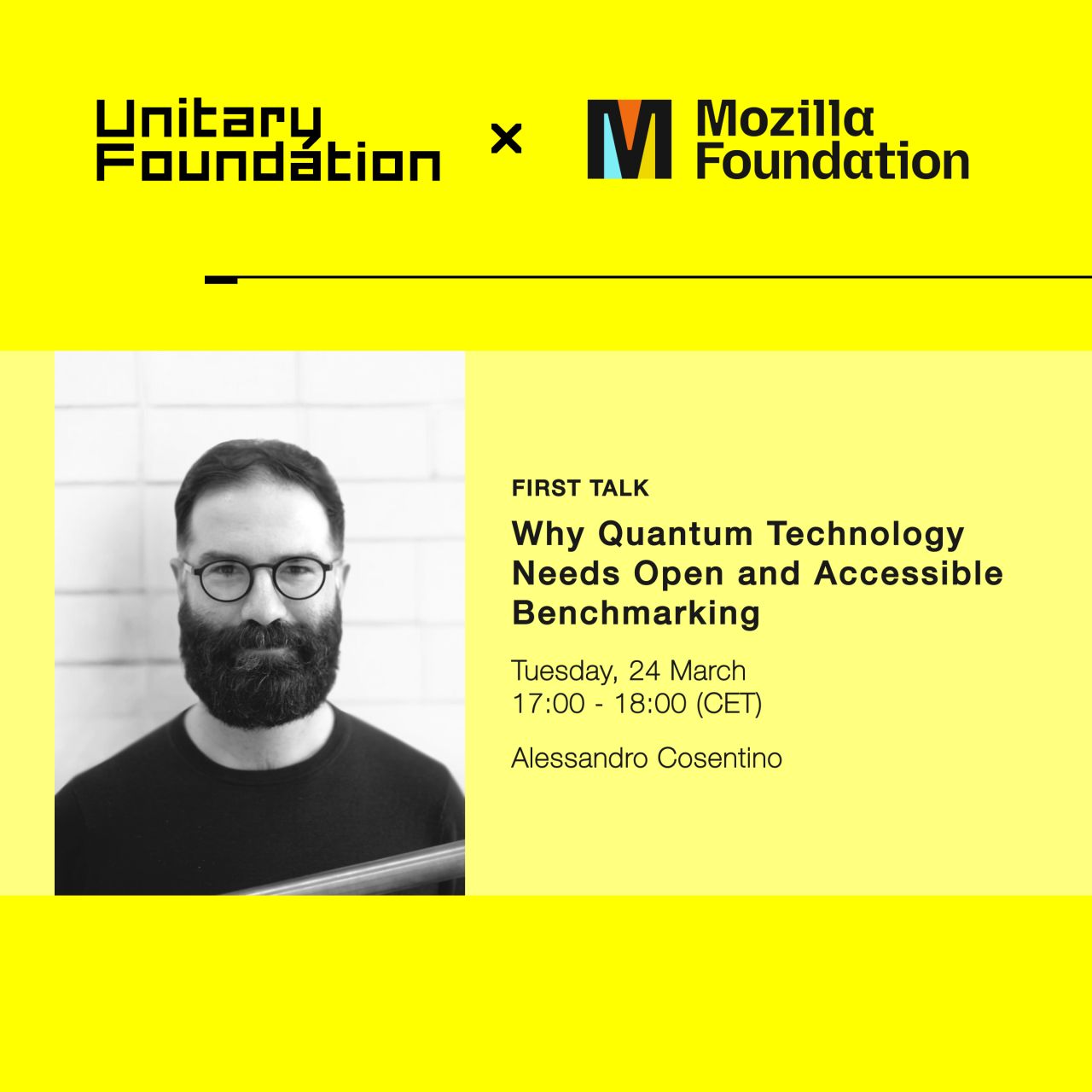
The series kicked off with a critical look at how we measure progress, led by UF staff member and head of the Metriq project, Alessandro Cosentino, PhD. We explored why benchmarking shouldn’t just be a proprietary race between hardware providers. For quantum technology to be truly useful to humanity, we need community-led, open-source benchmarking tools that allow for transparent comparisons and help steer the industry toward real-world impact.
3. The Power of Open Foundations
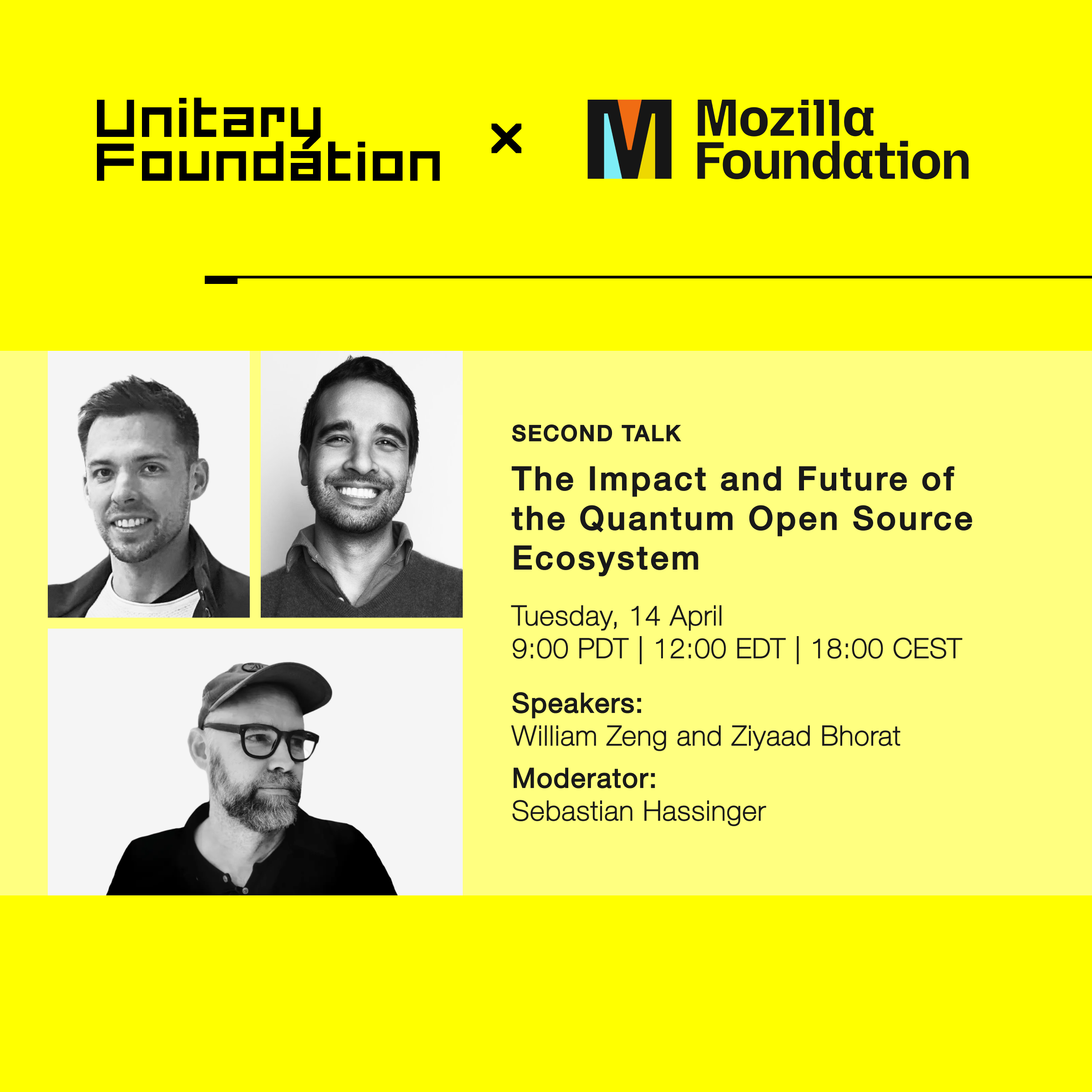
During the second session, Dr. William Zeng from UF and Dr. Ziyaad Bhorat from Mozilla Foundation sat down with Sebastian Hassinger from the New Quantum Era podcast to discuss the philosophy behind our partnership. This talk centered on the idea that openness must be “baked in” from day one. By prioritizing open-source software and hardware today, we prevent the “walled gardens” of the past and create a more resilient, innovative global community.
4. Grantmaking and Community Development
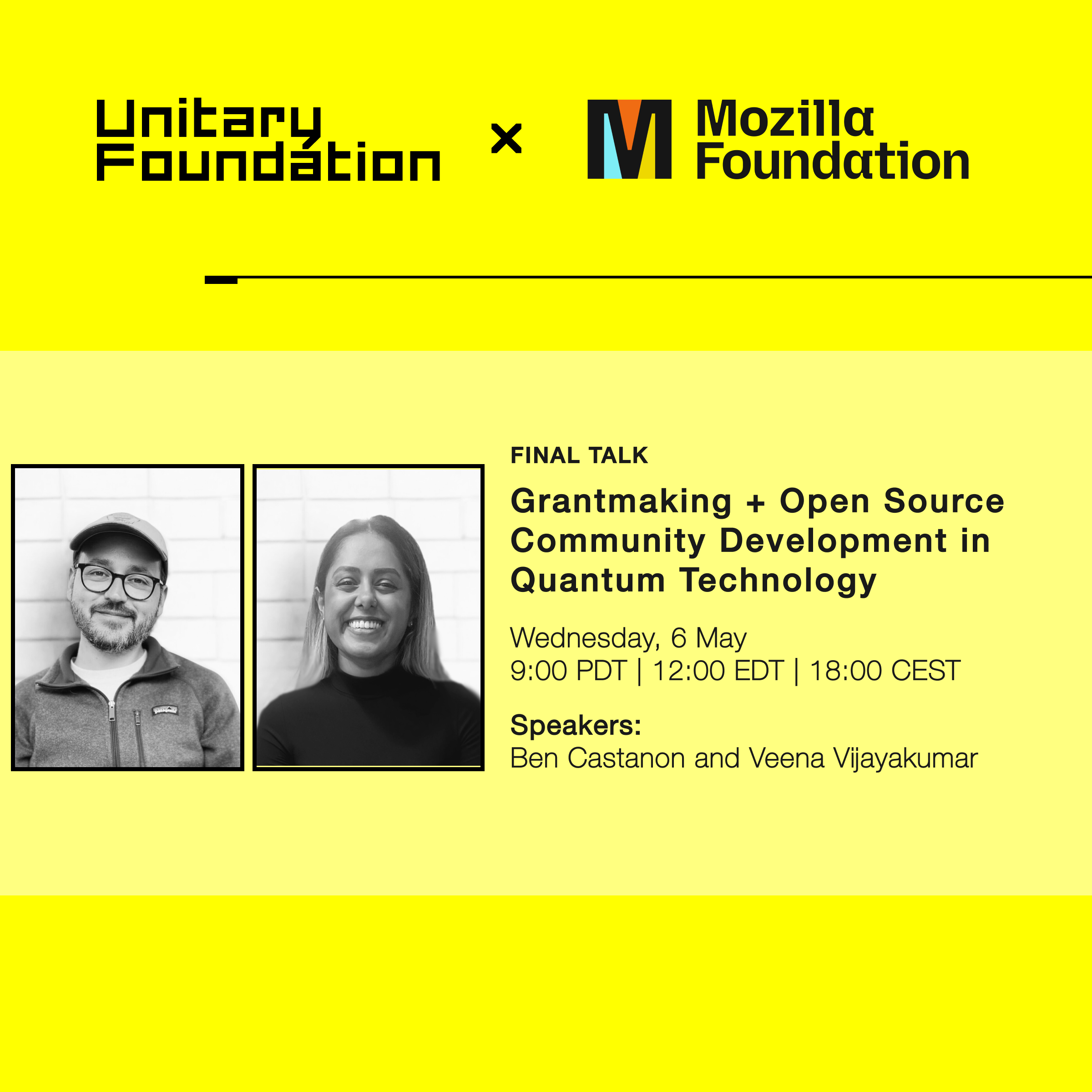
In our final installment with Ben Castanon and Veena Vijayakumar from UF, the discussion shifted to the practical: how do we actually fund and sustain this work? We shared insights into the state of grantmaking in the open-source quantum space and discussed how philanthropic efforts can better support maintainers and contributors to ensure long-term health for the ecosystem.
Additional Reading: “The Open Foundation Quantum Technology Needs”
In conjunction with these talks, Mozilla Foundation and UF released a joint whitepaper. The report outlines a roadmap for a quantum ecosystem built on public-interest technology, ethical design, and community governance. Read our Op-Ed piece here and our full whitepaper here.
What’s Next?
While this talk series has concluded, UF’s work with Mozilla Foundation continues. We are committed to fostering an ecosystem that benefits the most people, and that starts with the open-source spirit that has defined this series.
Thank you to everyone who tuned in, asked questions on Discord, and shared these sessions with their networks. Let’s keep building!