


From Code to Choreography: Highlights from the NYC Quantum Design Sprint
This is a collaborative post between UF + Harmoniqs staff. All photography by Won Jun Seok · wonjunseok.com
The Vision.
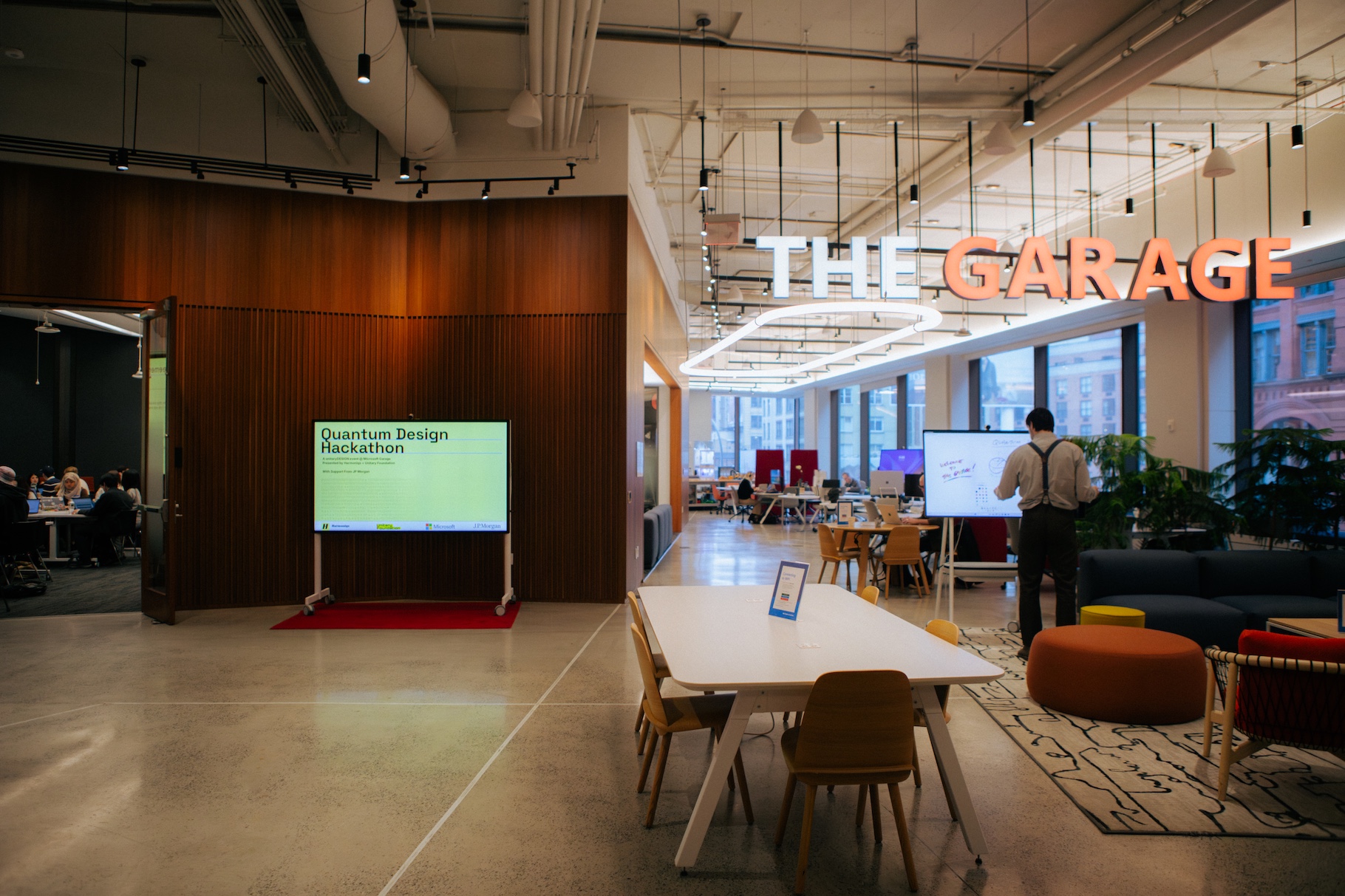
On February 20, 2026, a group of quantum enthusiasts gathered in NYC for the first ever Quantum Design Hackathon, a unitaryDESIGN event presented by Harmoniqs and Unitary Foundation. We brought together 80+ participants to tackle one big question:
With a crowd spanning design, art, physics, and engineering, it wasn't just a technical challenge—it was some of the most fun we’ve ever had.
As organizers, our goal was simple: bring new voices into quantum. By pairing creative newcomers with veteran researchers, we set out to spark fresh excitement and bridge the communication gap between the lab and the world.
Accessibility was our north star. Between collaborative hacking sessions, we hosted a series of talks designed to orient, inspire, and demo the future of the field:
- Ben Castanon, CEO of Unitary Foundation – Welcome to Quantum Design Hackathon
- Mike Pell, Director of the Microsoft Garage (Keynote) – Creativity, Quantum, and the “Why”
- Aaron Trowbridge, CEO of Harmoniqs – QC Fundamentals & Harmoniqs Demo
- Stewart Smith, Head of Experience Design, Moth Quantum – Hackathon Visualizations & Inspiration
- Francesco Valenti, IBM – Qiskit Platform Demo
- Dalila Pasotti, Art & Natural Sciences – Artistic applications
- Ishaan Pakrasi, Quantum Product, AWS / Specialist Lecturer, UAL – Quantum and Creative applications
- David Bryant, Chief Creative Officer of IBM (Keynote) – Closing Perspectives
The Challenge.
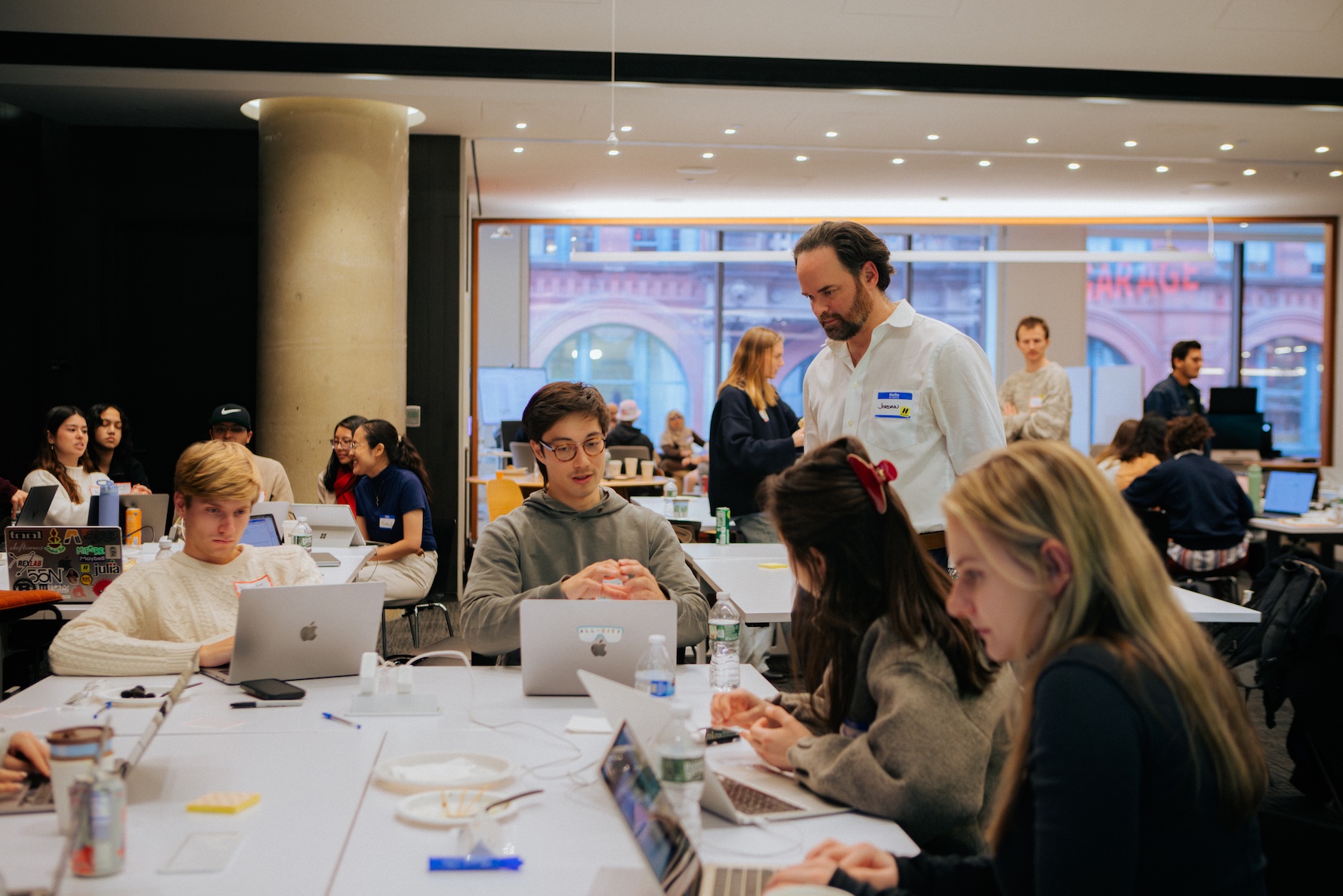
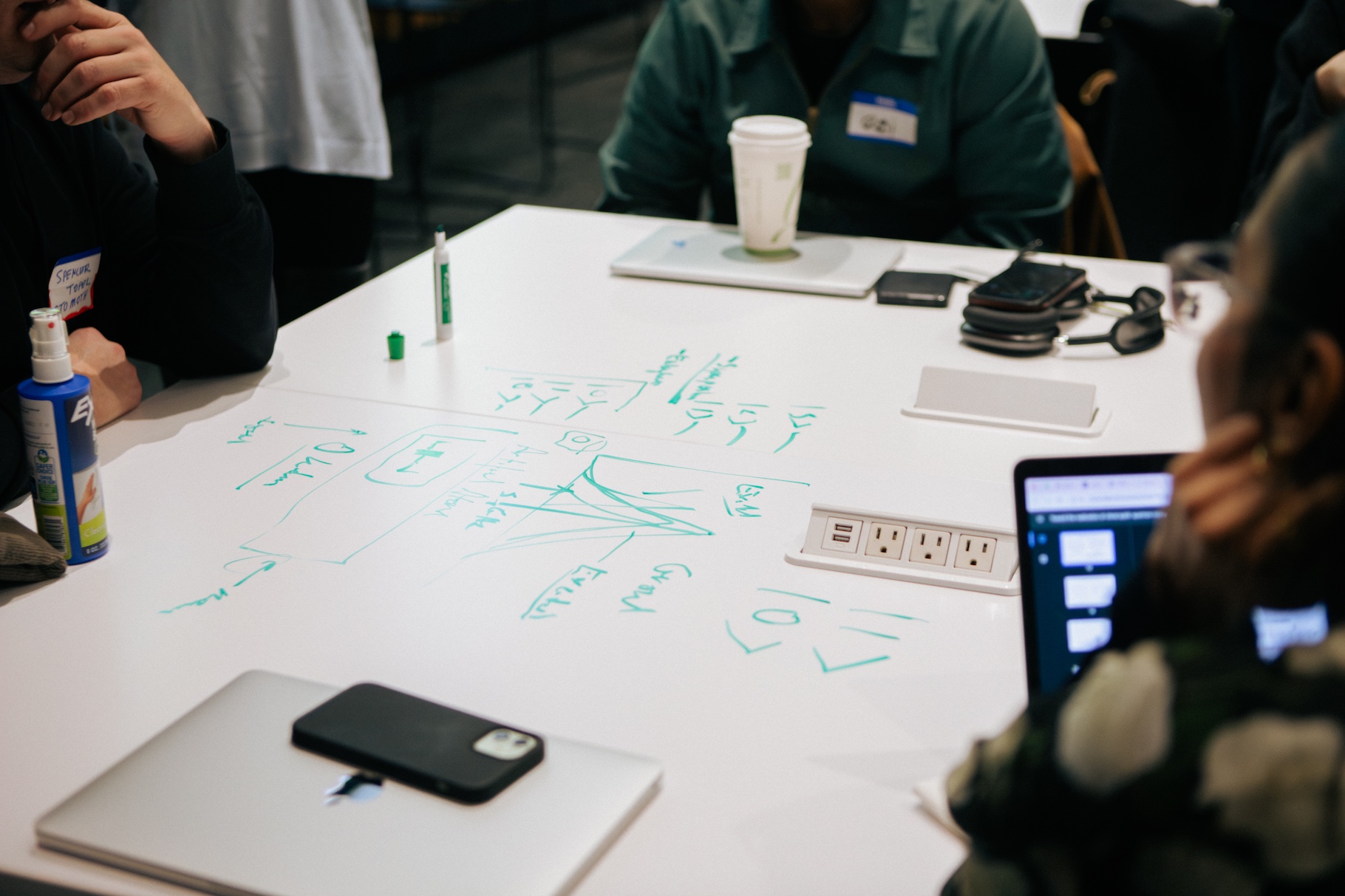
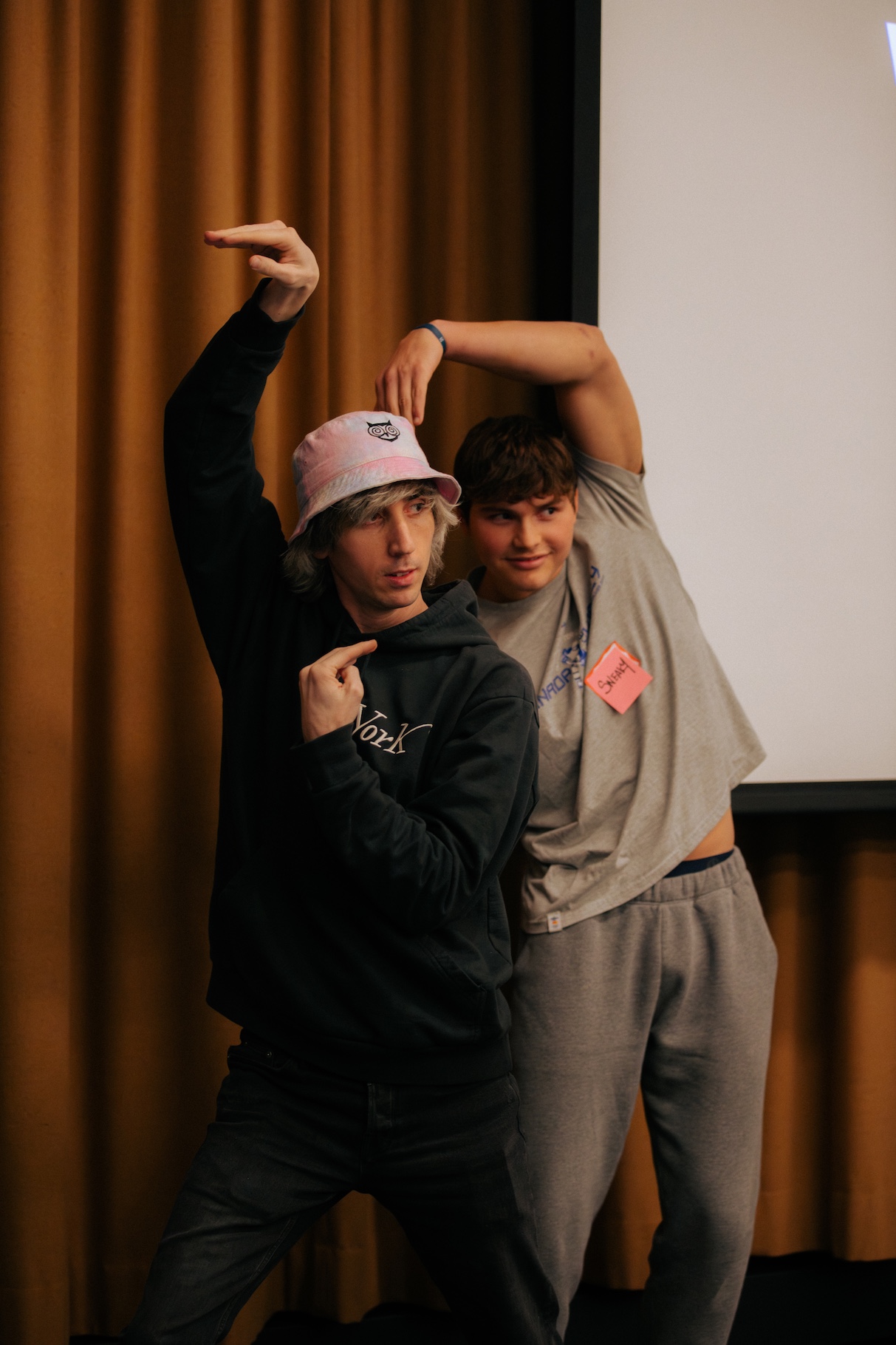
The challenge was intense: a “One Day, Six Hours” sprint to make the invisible tangible. With hackers split across 9 powerhouse teams, each group (with the support of mentors from diverse disciplinary backgrounds) took on the challenge of demystifying a specific qubit through creative storytelling and design—ranging from interactive simulations to a hackathon first: a full-blown theatrical debut. (Keep an eye out; they might just be headed for Broadway!)
The Winners!
As our opening keynote Mike Pell reminded us, the heart of this hackathon was collaboration, learning, and community—not just competition. In that spirit, we moved away from a single “grand prize” to celebrate excellence across five distinct categories. Here are the teams that took home the honors (and you can check out all of the projects in detail here!):
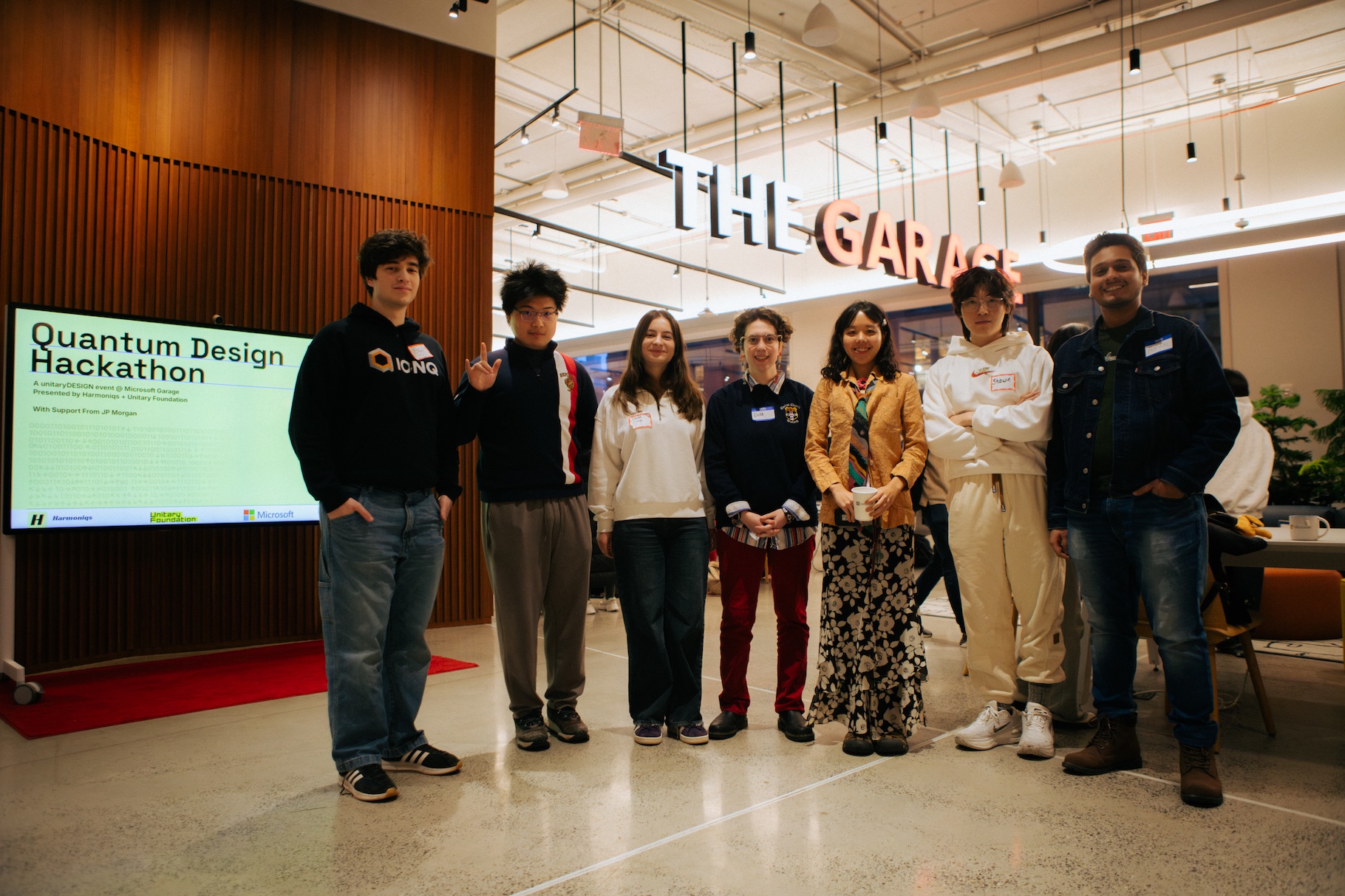
Best Visual Design
PHOTON & Quantum Rescue (Group 8)
Eloise Yalovitser, Arsh Kaushik, Shawn Dai, Ilayda Dilek, Ethan Feldman, Allen Tu, and Kezia Widjaja
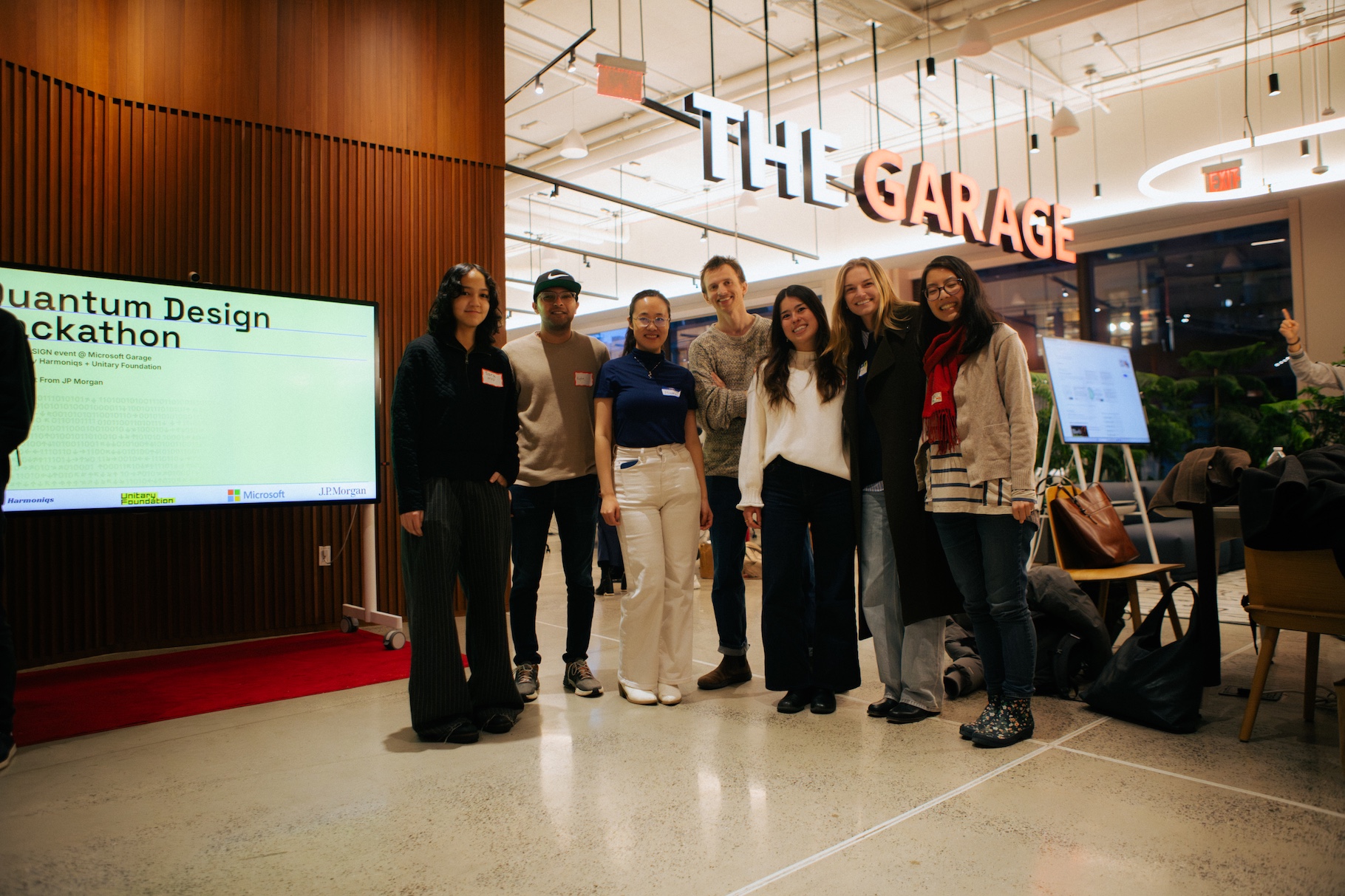
Best Experience
Silicon Pulse: Silicon Spin Explorer (Group 7)
Hannah Zhao, Raghav Mysore Vishveshwara, Sara Andotra, Atsuko Shimizu, and Ann Mahe
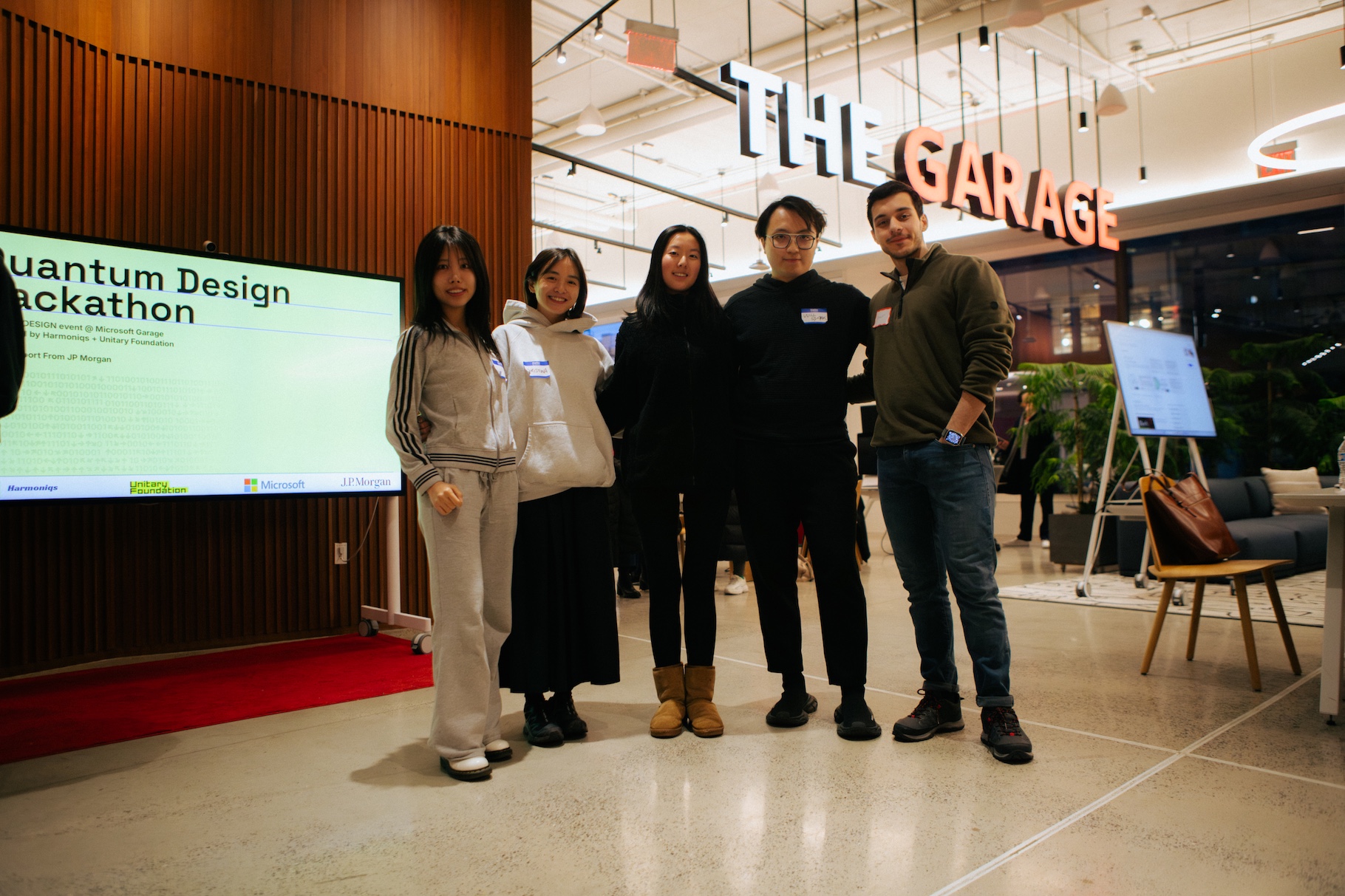
Best Translation of a Quantum Concept
CAT Qubit Visualization (Group 2)
Will Stark, Elizabeth Jiang, Yuni Jung, Amiratabak Bahengam, and Christina Lu
Most Original Abstraction/Metaphor
Transmon Quantum Computer (Group 1)
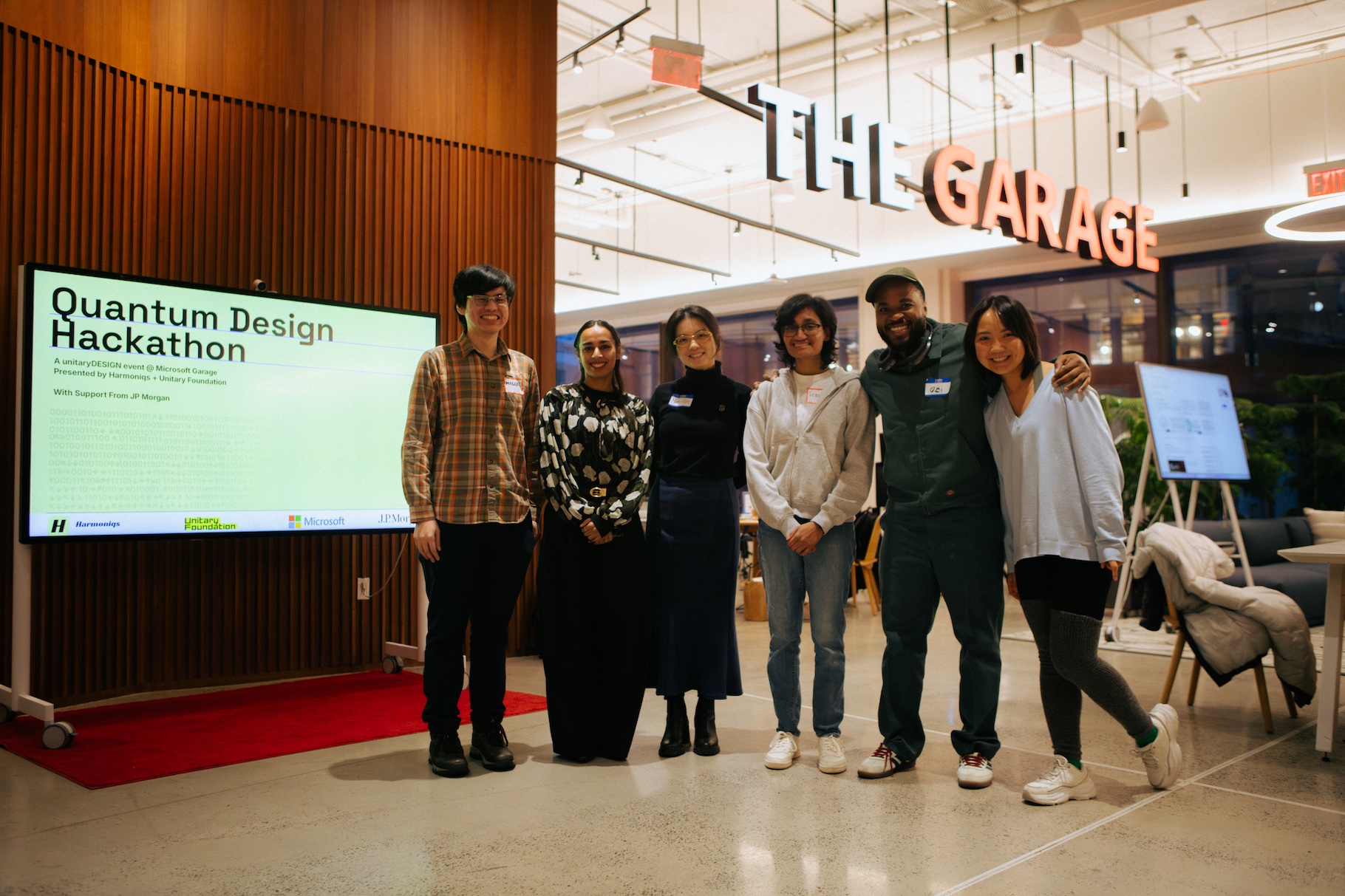
Han Qin, Samriddhi, Senuri, Sherly Deng, Miguel Palma, and Obi Nami
Audience Favorite
The Qubitarium of Trapped Ions (Group 5)
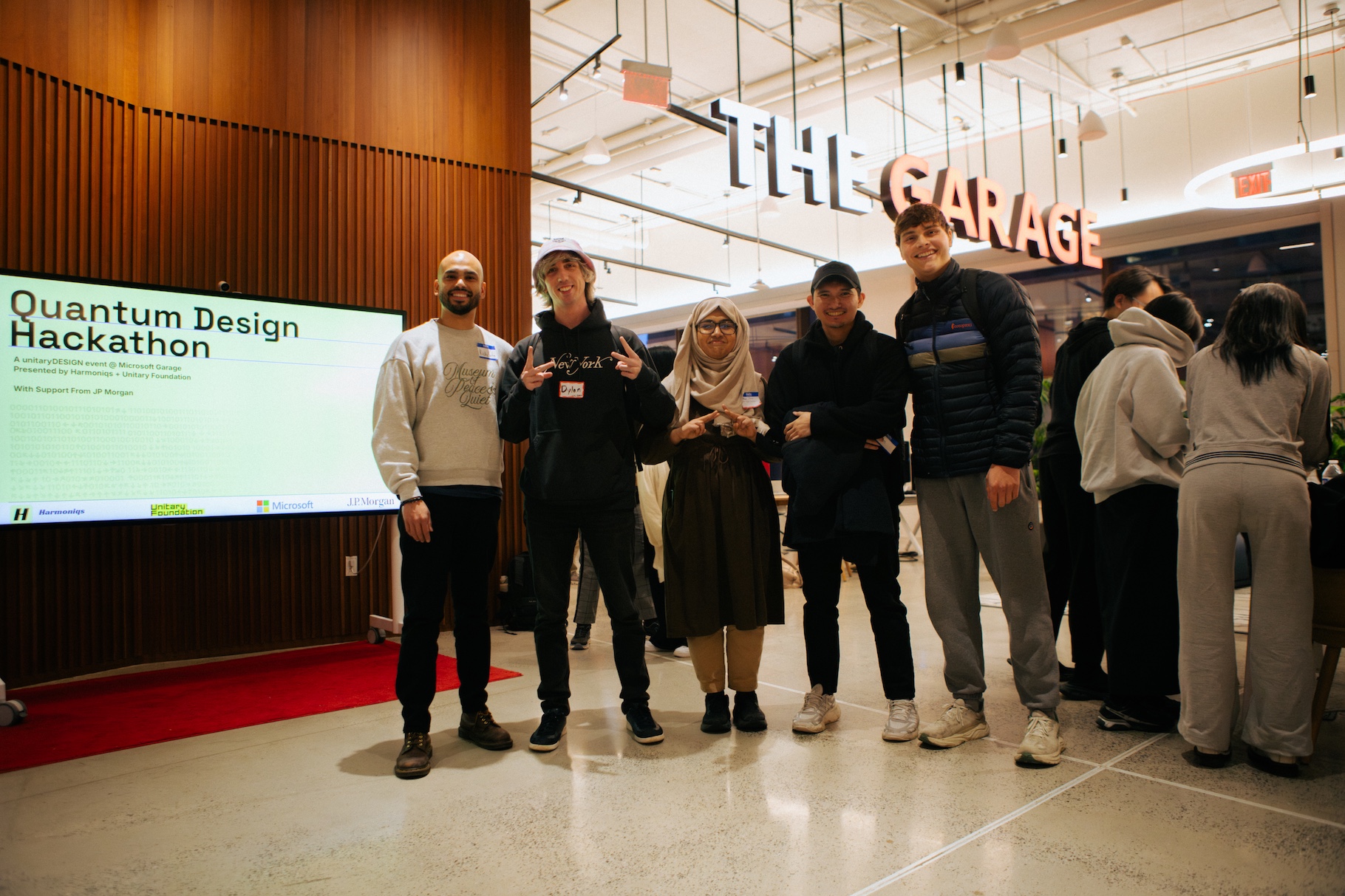
Ricky Soto, Mahnoor Fatima, Carrie Jaquith, Jasper Sands, Dylan Kawalec, Timothy Clark Dauz, and Alex [age 9!]
Voices from the Hackathon.
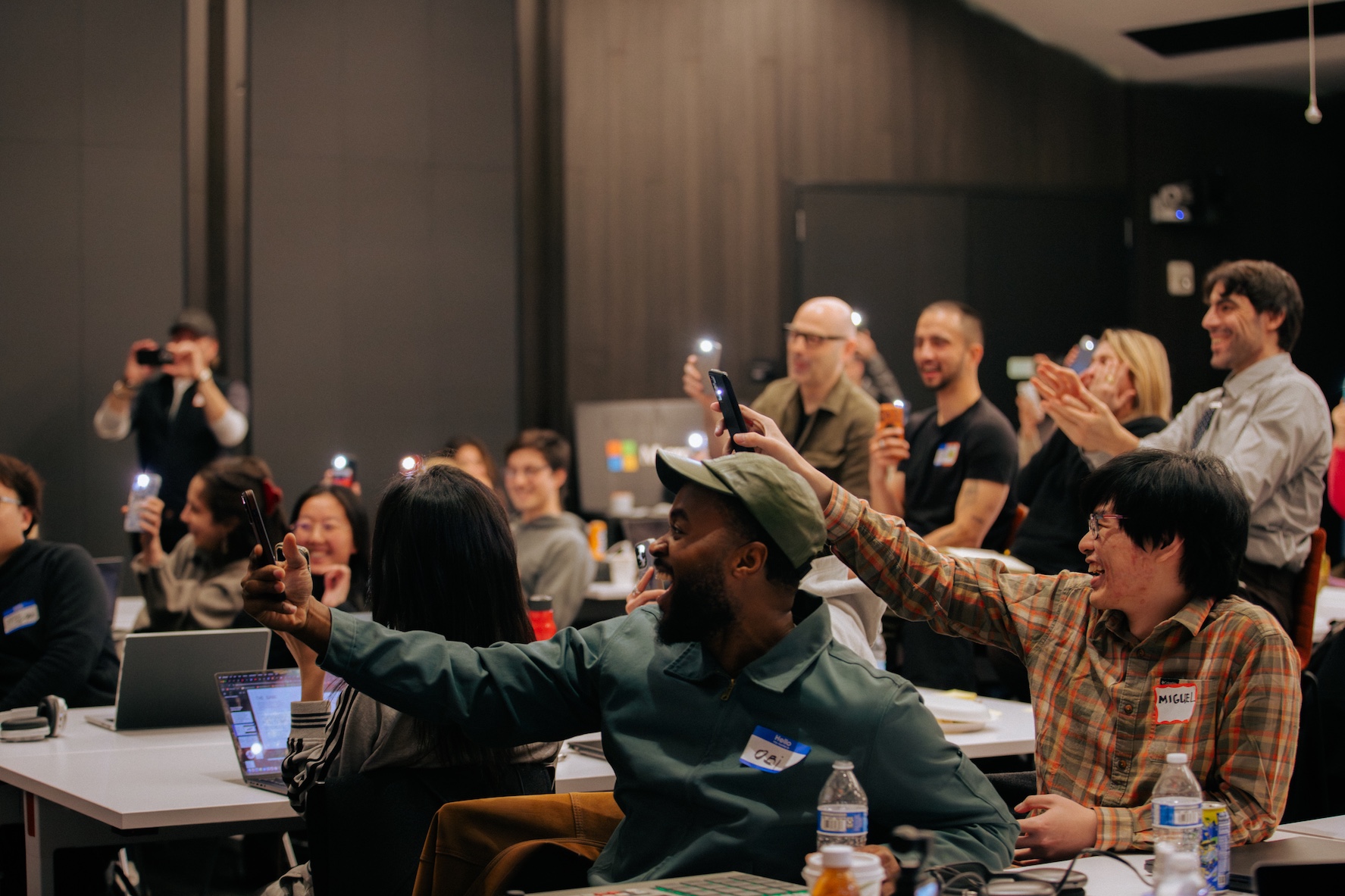
“We built this hackathon with the Harmoniqs team to serve the unitaryDESIGN goal of an open-source quantum community. Unitary Foundation has always been about making quantum technology benefit as many people as possible—and seeing this community come together in NYC felt like watching that mission come to life in real-time.” – Veena Vijayakumar, Unitary Foundation
“As was echoed by the incredible speakers we managed to get, the understanding of the natural world, what we call physics, and visual design have been entangled from the start. Today, we can build the most incredible devices that harness and wrangle quantum physics, but the visualizations of these devices have not kept pace with technological progress. Seeing what teams of designers and physicists could accomplish—in just four hours of hacking—that gap is inexplicable. We need more of this: more creativity, more ingenuity, more harmony, more unitarity!” – Aaron Trowbridge, Co-Founder & CEO, Harmoniqs
Hacker quotes
“I’m a product designer so I’ve always worked with software engineers and designers, so working with physicists was a very new and exciting experience for me”
“The most valuable part was the interdisciplinary collaboration—learning quantum concepts through hands‑on making with designers, artists, and engineers, supported by accessible mentors. This made complex ideas feel approachable and enabled creative, intuitive interpretations rather than purely theoretical discussions.”
“Seeing the mentors’ work and how it bridged the creative and scientific fields was inspiring. And meeting new people in totally different fields was a great way to get out of my own circle.”
“Meeting people outside of work, especially designers (since I mostly work with STEM folks). Very refreshing to get other perspectives on the QC field. Very interdisciplinary event!”
“The diversity of voices in the room. Such a unique combination of people to learn from, all in one night.”
Gratitude & Supporters.
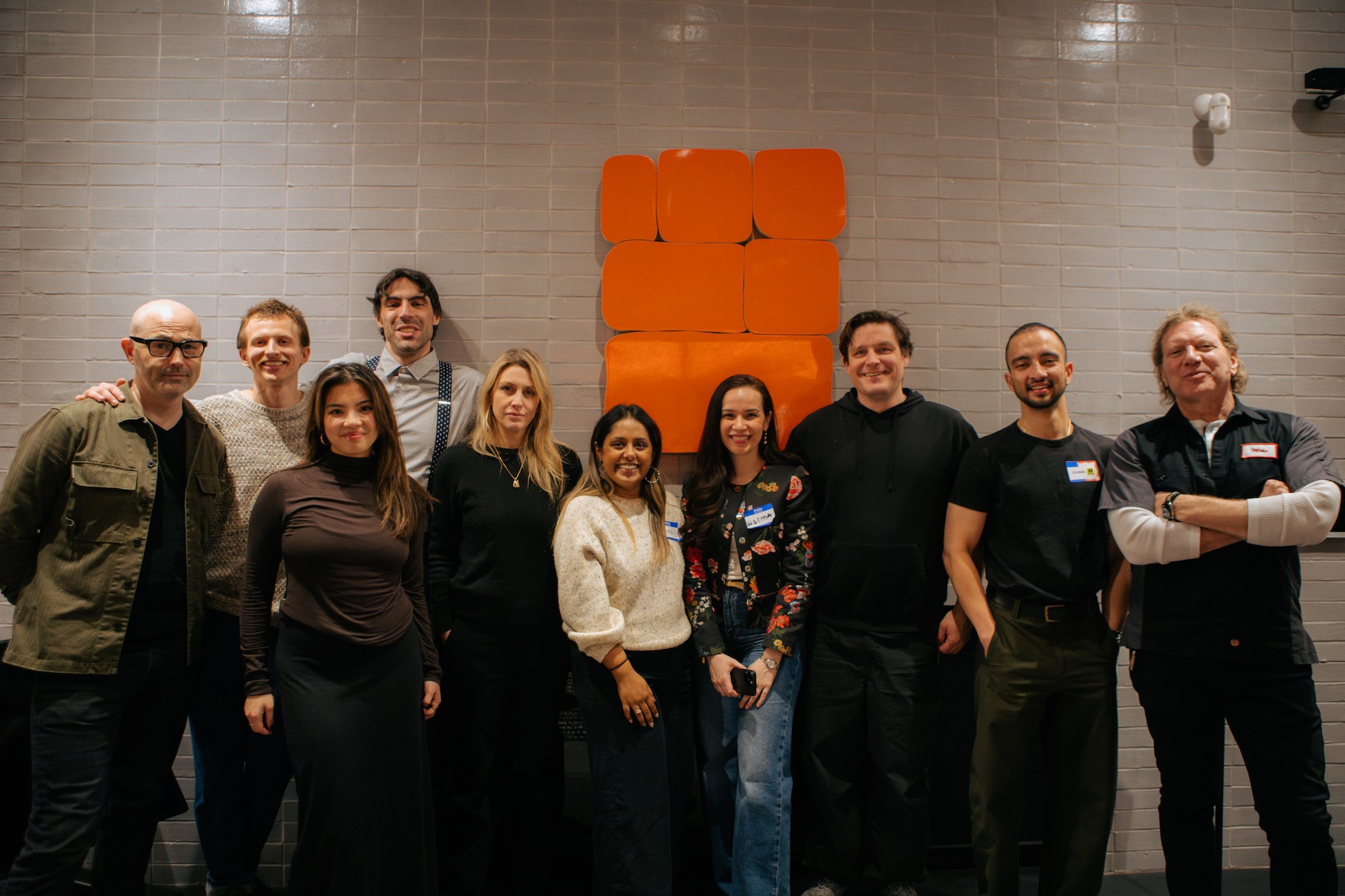
At the start of the day, we didn’t fully know what would unfold. Bringing artists, designers, physicists, and engineers into the same room was an experiment in itself. What conversations would emerge? What would happen when radically different disciplines shared an eight-hour sprint? What emerged was more than a hackathon — it was proof that quantum needs creative collaboration to move forward.
This event was made possible by the right people and the right partners.
A huge thank you to Microsoft Garage for hosting us in a space built for bold experimentation and real innovation. It was the perfect setting to explore what happens when science meets design.
We’re grateful to J.P. Morgan for their strategic support and belief in advancing emerging technologies through community-driven initiatives.
Thank you to our community partner, Moth Quantum, for helping bridge quantum and experience design — and for championing better ways to translate complex science into human understanding.
And to our mentors: this sprint worked because of you. Across nine teams, you helped participants navigate qubit architectures, clarify technical concepts, pressure-test ideas, and push creative boundaries:
- Deborah Berebichez, AI and Quantum Leader
- Kate Bonner, Columbia University + Independent Designer/Artist
- Tyson Jones, NVIDIA
- Alberto Maldonado, QOSF
- Jordan Harvey, Remote Control
- Grace Lindsell, IBM
- Stewart Smith, Moth Quantum
- Francesco Valenti, IBM
- Dalila Pasotti, Independent Artist
- Ishaan Pakrasi, AWS + UAL
As the night wrapped and projects hit the stage, one question kept coming up: When’s the next one? So…
What’s next?
Here’s what YOU can do right now to make sure you’re in the know for the next Quantum Design Hackathon:
- Explore the Work: Check out↗ all of the projects that were presented in this iteration of the hackathon and feel free to reach out to us with feedback!
- Join the Community: Follow Harmoniqs and Unitary Foundation on socials to be the first to find out when we announce the next quantum design event
- Chat with us: We have a Quantum Design channel on the Unitary Foundation Discord server. You can learn more about what’s happening next, ask questions about ways to upskill what you’ve learned, and more!